


自动加载树外扩展#
作者: Ji Yuanhao
扩展自动加载机制使 PyTorch 能够在没有显式导入语句的情况下自动加载树外后端扩展。此功能对用户很有益,因为它提高了用户体验,并使用户能够在不显式加载或导入特定于设备的扩展的情况下,遵循熟悉的 PyTorch 设备编程模型。此外,它还有助于零代码更改地轻松将现有 PyTorch 应用程序适配到树外设备。有关更多详细信息,请参阅 [RFC] Autoload Device Extension。
如何在 PyTorch 中使用树外扩展自动加载
查看 Intel Gaudi HPU、Huawei Ascend NPU 的示例
PyTorch v2.5 或更高版本
注意
此功能默认启用,可以通过使用 export TORCH_DEVICE_BACKEND_AUTOLOAD=0 来禁用。如果您遇到类似“Failed to load the backend extension”的错误,此错误与 PyTorch 无关,您应该禁用此功能并向树外扩展维护者寻求帮助。
如何将此机制应用于树外扩展?#
例如,假设您有一个名为 foo 的后端和一个名为 torch_foo 的相应包。确保您的包与 PyTorch 2.5 或更高版本兼容,并在其 __init__.py 文件中包含以下代码片段:
def _autoload():
    print("Check things are working with `torch.foo.is_available()`.")
然后,您需要做的就是在您的 Python 包中定义一个入口点。
setup(
    name="torch_foo",
    version="1.0",
    entry_points={
        "torch.backends": [
            "torch_foo = torch_foo:_autoload",
        ],
    }
)
现在,您可以通过仅添加 import torch 语句来导入 torch_foo 模块,而无需添加 import torch_foo。
>>> import torch
Check things are working with `torch.foo.is_available()`.
>>> torch.foo.is_available()
True
在某些情况下,您可能会遇到循环导入的问题。以下示例展示了如何解决这些问题。
示例#
在此示例中,我们将使用 Intel Gaudi HPU 和 Huawei Ascend NPU 来确定如何使用自动加载功能将您的树外扩展与 PyTorch 集成。
habana_frameworks.torch 是一个 Python 包,它使用 PyTorch HPU 设备键使用户能够在 Intel Gaudi 上运行 PyTorch 程序。
habana_frameworks.torch 是 habana_frameworks 的一个子模块,我们在 habana_frameworks/setup.py 中向 __autoload() 添加了一个入口点。
setup(
    name="habana_frameworks",
    version="2.5",
+   entry_points={
+       'torch.backends': [
+           "device_backend = habana_frameworks:__autoload",
+       ],
+   }
)
在 habana_frameworks/init.py 中,我们使用一个全局变量来跟踪我们的模块是否已加载。
import os

is_loaded = False  # A member variable of habana_frameworks module to track if our module has been imported

def __autoload():
    # This is an entrypoint for pytorch autoload mechanism
    # If the following condition is true, that means our backend has already been loaded, either explicitly
    # or by the autoload mechanism and importing it again should be skipped to avoid circular imports
    global is_loaded
    if is_loaded:
        return
    import habana_frameworks.torch
在 habana_frameworks/torch/init.py 中,我们通过更新全局变量的状态来防止循环导入。
import os

# This is to prevent torch autoload mechanism from causing circular imports
import habana_frameworks

habana_frameworks.is_loaded = True
torch_npu 使用户能够在 Huawei Ascend NPU 上运行 PyTorch 程序,它利用 PrivateUse1 设备键,并向最终用户公开设备名称 npu。
我们在 torch_npu/setup.py 中定义了一个入口点。
setup(
    name="torch_npu",
    version="2.5",
+   entry_points={
+       'torch.backends': [
+           'torch_npu = torch_npu:_autoload',
+       ],
+   }
)
与 habana_frameworks 不同,torch_npu 使用环境变量 TORCH_DEVICE_BACKEND_AUTOLOAD 来控制自动加载过程。例如,我们将其设置为 0 以禁用自动加载,从而防止循环导入。
# Disable autoloading before running 'import torch'
os.environ['TORCH_DEVICE_BACKEND_AUTOLOAD'] = '0'

import torch
工作原理#
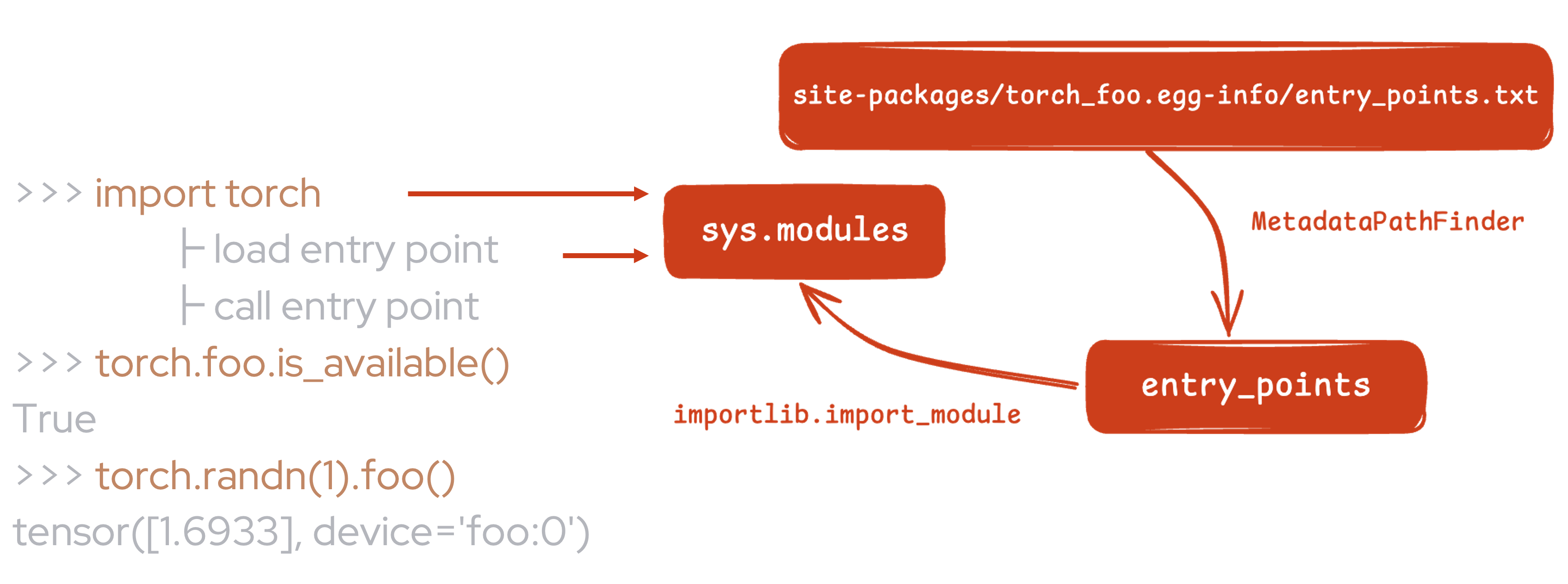
自动加载是基于 Python 的 入口点 (Entrypoints) 机制实现的。我们在 torch/__init__.py 中发现并加载由树外扩展定义的所有特定入口点。
如上所示,在安装 torch_foo 后,当加载您定义的入口点时,您的 Python 模块就可以被导入,然后您可以在调用它时执行一些必要的操作。
请参阅此 pull request 中的实现:[RFC] Add support for device extension autoloading。
结论#
在本教程中,我们了解了 PyTorch 的树外扩展自动加载机制,该机制可以自动加载后端扩展,无需添加额外的导入语句。我们还了解了如何通过定义入口点将此机制应用于树外扩展,以及如何防止循环导入。我们还回顾了如何使用自动加载机制与 Intel Gaudi HPU 和 Huawei Ascend NPU 结合使用的示例。